
Our Roots

Longyear’s story began in the 1800s with an entrepreneurial spirit, a deep connection to the land, and an ability to recognize opportunity. More than 150 years later, those same principles continue to shape who we are and where we’re going.

From the Beginning

John M. Longyear was an entrepreneur and pioneer whose work helped shape the responsible development of natural resources throughout the northern United States and Canada.

Longyear saw possibility in the land and understood that creating lasting value required more than recognizing an opportunity; It required knowledge, stewardship, patience, and a willingness to think beyond the immediate future.

That perspective became the foundation of JM Longyear and more than a century later, it remains central to how we operate.

Solid black square image

Our Story Begins with John Munro Longyear

  • 1873 | First Explorations

    John M. Longyear begins his career in the Upper Peninsula as a timber cruiser, partnering to form Mathews and Longyear to assess and broker regional tracts. 

  • 1878 | Ayer & Longyear Partnership

    While serving as resident land agent for the Lake Superior Ship Canal, Railway and Iron Company, Longyear establishes a partnership with Boston financier Frederick Ayer to jointly acquire and manage Upper Peninsula timber and mineral lands. 

  • 1880 | Chapin Mine Development

    Longyear negotiates the lease for the Chapin Mine in Iron Mountain, establishing a framework that separates long-term land ownership from the operational business of resource extraction. 

  • 1892 | The Pillsbury-Bennett-Longyear Venture

    Partnering with Russell M. Bennett, Longyear deploys early diamond-core drill technology to explore lands in northern Minnesota. The resulting discovery of high-grade iron ore establishes a multi-generational joint venture with the Pillsbury and Bennett families. 

  • 1897 | E. J. Longyear Exploration Company

    Longyear provides the financial backing to launch a regional diamond-drilling startup led by his cousin, E. J. Longyear. The firm eventually evolves into Boart Longyear, an international drilling manufacturer and services provider. 

  • Late 1800s – Early 1900s | Industrial Manufacturing Investments

    To support Marquette's growing industrial base, Longyear funds regional manufacturing startups including Lake Shore Engine Works, Northern Furnace Company, and Polygonal Works. He also provides the decade-long developmental funding required to launch the Universal Button Company. 

  • Early 1900s | Establishing Local Financial Infrastructure

    Supporting the Upper Peninsula's financial growth, Longyear serves as a key organizer, director, and the initial president of Marquette National Bank, and directs First National Bank. 

  • 1910s | Commercial & Hospitality Holdings

    Longyear's regional portfolio expands to include civic and commercial enterprises such as the Kawbawgam Hotel, Crystal Falls Hotel, Gannon Grocery, Cloverland Cattle, Finnish Republican Printing, and Cloverland Automobile. 

  • 1917 | Dead River Hydroelectric Project

    Longyear and Frederick Ayer structure a 100-year lease with the Cleveland-Cliffs Iron Company to construct and operate a major hydroelectric generating station along the Dead River. 

  • 1928 | Corporate Reorganization

    Following Longyear’s passing, his portfolio of real estate, resource leases, and operating investments is organized into unified corporate entities, including Longyear Realty Corporation and Longyear Estate, Inc.

  • 1952 | Sustained-Yield Forestry

    The Longyear companies institute a comprehensive sustained-yield forestry program across their Upper Peninsula acreage, utilizing sample growth plots and selective harvesting to ensure continuous timber production. 

  • 1954 | Manufacturing Mergers

    After decades of operation, Longyear Realty oversees the successful merger of its majority stake in the Universal Button Company into Acro Manufacturing (and subsequently Robertshaw-Fulton Controls), achieving a highly profitable exit for the original local investment. 

  • 1965 | J. M. Longyear Heirs, Ltd.

    The family holdings are restructured into J. M. Longyear Heirs, A Limited Partnership. Headquartered in Marquette, the partnership continues the multi-generational management of the family's land, timber, and investment portfolio. 

  • 2000-2010

    Acquisition of 150,000 acres of commercial timberlands in Michigan and Ontario.

  • 2010

    Led the $300M Frontier Renewable cellulosic ethanol project.

  • 2012-2015

    Invested in forest products harvesting, transportation, and manufacturing leading to ownership of Northern Hardwoods.

  • 2018

    Acquisition of Frontier Medical (re-branded as Able Medical Devices).

  • 2019

    Eagle Copper Nickel Mine begins producing mineral royalties on Longyear lands.

  • 2024

    Strategic divestiture of legacy timberlands to capitalize new growth vectors.

  • Present

    Launch of the "Heartwood" technology park concept.

The industries have changed.
The mindset hasn’t.

For generations, Longyear has grown by recognizing potential and having the patience to develop it. That same entrepreneurial spirit continues to guide how we invest, manage, and grow today.

What began in land and natural resources has grown into a diverse portfolio of companies, assets, and investments.

While Longyear looks very different today than it did more than a century ago, the philosophy behind it remains remarkably consistent: embrace opportunity, invest thoughtfully, and create value that lasts.

Today, that approach supports businesses, employees, contractors, communities, and continued investment throughout the region and beyond.

Our Roots Still Shape What Comes Next
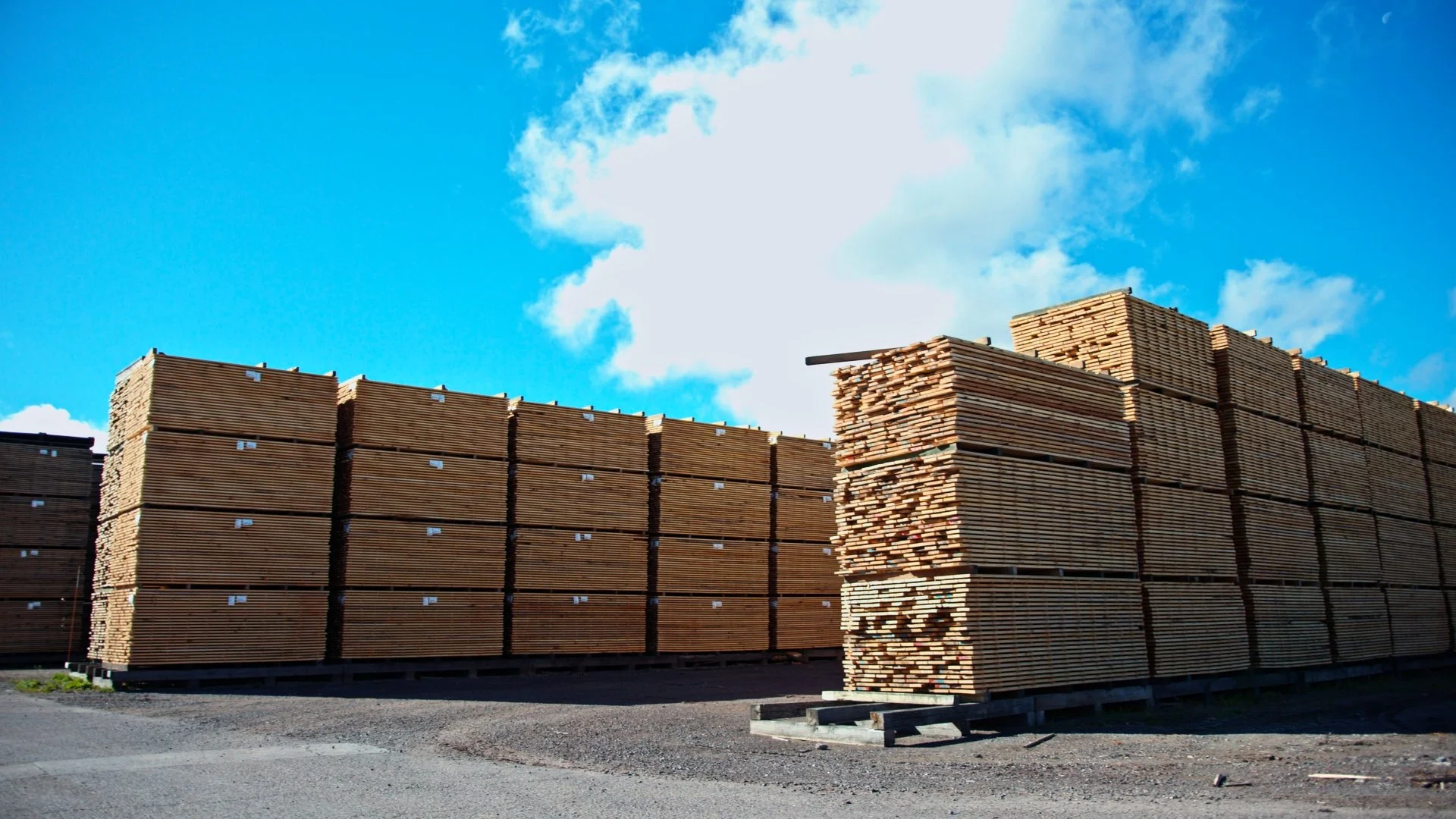
Stacks of lumber at a wood yard under a bright blue sky